Dark Windows Don’t Mean Cooler Cabins | Ceramic Window Tint St. Louis
Dark Windows Don’t Mean Cooler Cabins — Here’s Why
Article 2 of 4
Cabin Stability Series
Seasonal temperature changes affect more than just outdoor comfort — they influence the environment inside your vehicle as well. Sunlight passing through untreated automotive glass allows infrared energy to enter the cabin, gradually warming interior surfaces and creating uneven temperature conditions.
The Cabin Stability series explores how sunlight, infrared heat, and vehicle glass interact throughout the year. By understanding how these factors influence cabin conditions, drivers can make more informed decisions about comfort, interior preservation, and long-term vehicle protection.
Each article examines a different aspect of how heat enters the vehicle and how modern technologies help manage that environment.
If you discovered this article through our parking lot education card or The Call newspaper, welcome. We're glad you're here.
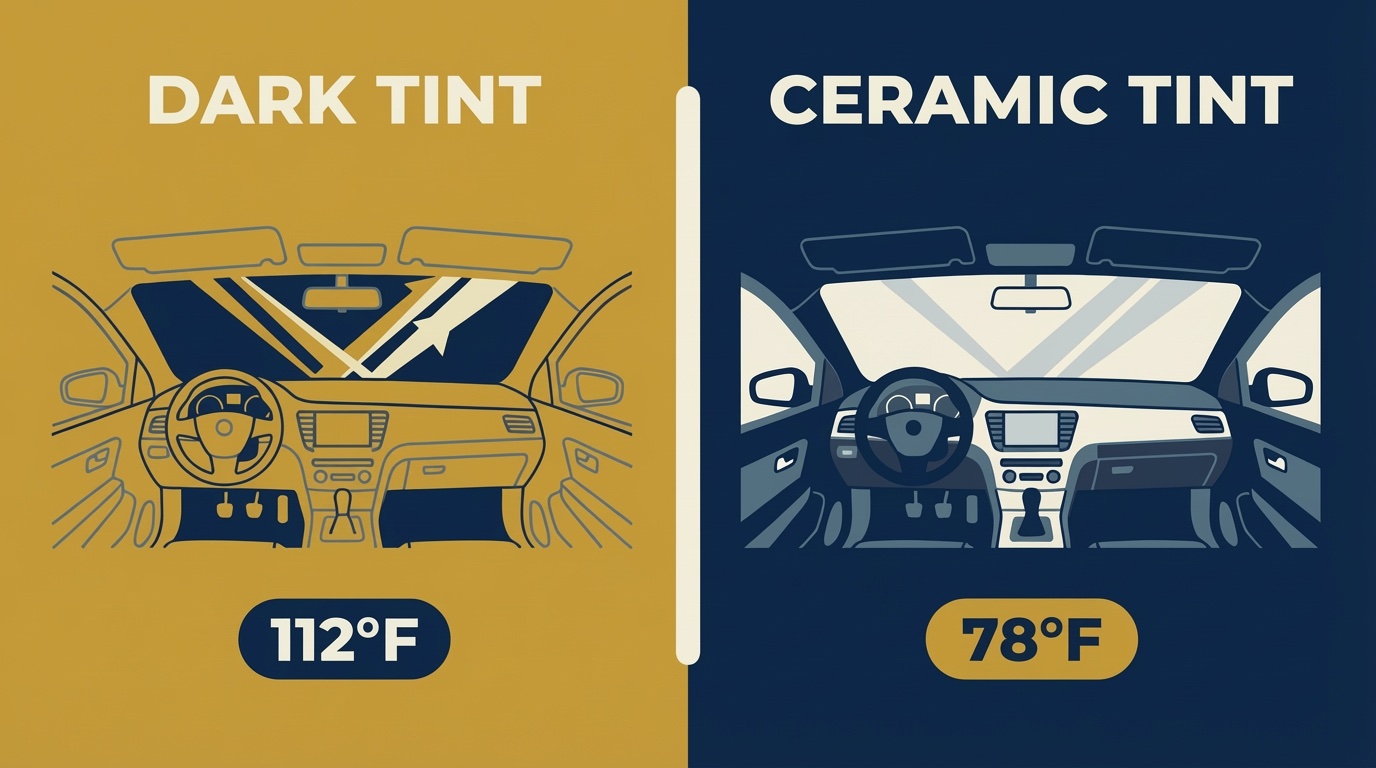
Many drivers assume that darker windows automatically mean a cooler vehicle interior.
It’s a logical assumption. If the glass looks darker, it feels like it should block more sunlight and heat.
But visible darkness and heat rejection are not the same thing.
Understanding the difference helps explain why some vehicles remain comfortable in the sun while others still become extremely hot even with dark-looking glass.
Why Dark Glass Doesn’t Always Reduce Heat
Factory privacy glass and traditional dyed window films primarily reduce visible light. They make the vehicle interior appear shaded from the outside and can help with glare.
However, the heat you feel inside a vehicle is largely caused by infrared radiation.
Infrared energy is invisible, but it carries the thermal energy responsible for warming interior surfaces such as dashboards, steering wheels, seats, and door panels.
Because infrared energy cannot be seen, glass can appear dark while still allowing a significant amount of heat to pass through.
This is why two vehicles parked side by side may look similar from the outside, yet feel dramatically different when you open the door.
The difference often comes down to how well the glass is managing infrared heat.
The Role of Infrared Heat
When sunlight reaches your vehicle, several types of energy are present.
Visible light is what we see.
Infrared radiation is the portion responsible for heat.
Untreated automotive glass allows a large amount of infrared energy to pass through into the cabin.
Once inside, interior materials absorb that energy and begin to warm. Dashboards, steering wheels, and seating surfaces often reach temperatures much higher than the outside air.
This heat buildup contributes to the temperature spikes drivers experience when returning to a vehicle that has been parked in the sun.
Why Heat Management Matters
Repeated exposure to infrared heat doesn't just affect comfort.
Over time, the heating and cooling cycle inside a vehicle can contribute to gradual interior wear.
Drivers may notice:
• dashboards fading or developing stress lines
• leather surfaces gradually drying out
• trim materials loosening
• electronic displays enduring repeated heat cycles
Because these effects occur slowly, many drivers don’t immediately connect them to sunlight and heat entering through the glass.
Managing infrared heat helps reduce these cycles and supports a more balanced interior environment.
How Ceramic Window Film Changes the Equation
Modern ceramic-engineered window films address the problem differently than traditional dyed films.
Instead of primarily darkening the glass, ceramic film technology focuses on reducing infrared heat penetration.
These films are engineered with microscopic ceramic particles that help limit the amount of heat energy entering through the glass.
By reducing infrared radiation before it enters the cabin, ceramic films can help:
• lower peak interior temperatures
• reduce rapid heating during sun exposure
• create a more balanced interior environment
The goal is not simply darker windows.
The objective is improved thermal performance and cabin stability.
Seeing the Difference
Because infrared energy is invisible, many drivers don’t realize how much heat is entering their vehicle through the glass.
At Reflekt Precision, we demonstrate this difference using an infrared heat comparison display.
This demonstration allows visitors to feel how untreated glass and ceramic film behave under the same light conditions.
Seeing the difference firsthand helps drivers better understand how managing infrared heat influences cabin comfort.
The Goal Isn't Darkness. It's Heat Control.
Window tint has long been associated with darker glass and appearance.
Modern ceramic film technology shifts the focus toward thermal control and interior protection.
By managing how infrared heat enters the cabin, ceramic film helps create a more stable environment inside the vehicle while maintaining clear visibility and natural light.
For many drivers, the difference is not just how the vehicle looks — but how it feels to drive during changing seasonal conditions.
Ceramic Window Tint Installation in St. Louis
Reflekt Precision provides professional ceramic window tint installation in St. Louis and South St. Louis County, helping drivers reduce infrared heat and improve cabin comfort throughout the year.
Drivers visit Reflekt Precision from across the region, including:
• Oakville
• Mehlville
• Lemay
• Affton
• Arnold
• Sunset Hills
If you're searching for ceramic window tint in St. Louis focused on heat management and interior protection, Reflekt Precision specializes in advanced infrared heat reduction and vehicle preservation solutions.
Frequently Asked Questions
Does darker tint always reduce more heat?
Not necessarily. Darkness affects visible light, while heat is largely caused by infrared energy. Ceramic films are designed to reduce infrared heat more effectively than traditional dyed films.
Can ceramic window tint stay light but still reduce heat?
Yes. Ceramic film technology focuses on heat rejection rather than darkness, allowing drivers to maintain visibility while improving cabin comfort.
Why does my car still get hot with factory privacy glass?
Factory privacy glass mainly reduces visible light and glare. It does not significantly reduce infrared heat entering through the glass.
About Reflekt Precision
Reflekt Precision, located in South St. Louis County, specializes in ceramic window tint and comprehensive vehicle protection focused on long-term interior preservation and thermal performance.
Owner Jeff Nowak brings a detail-driven approach to helping drivers manage heat, glare, and interior wear through modern ceramic film technology.